Wednesday, 27 April 2016

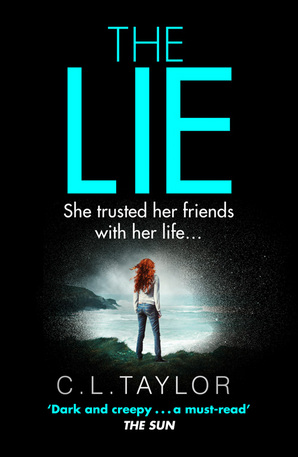
Review - The Lie by C. L. Taylor

Product Details image
 
Published by : Harper Collins UK
24 April 2015
Copy : Paperback - Reviewer purchased
 
 
The Blurb
 
I know your name's not really Jane Hughes...
 
Jane Hughes has a loving partner, a job in an animal sanctuary and a tiny cottage in rural Wales.  She's happier than she's ever been but her life is a lie.  Jane Hughes does not really exist. 
 
Five years earlier Jane and her then best friends went on holiday but what should have been the trip of a lifetime rapidly descended into a nightmare that claimed the lives of two of the women.
 
Jane has tried to put the past behind her but someone knows the truth about what happened.  Someone who won't stop until they've destroyed Jane and everything she loves...
 
 
The Very Pink Notebook Review
 
 
The concept behind this novel is brilliant and I was looking forward to reading it.  I have to say, it is a very creepy and dark plot, maybe a little too dark for me, but that aside, it certainly had me thinking about it for days afterwards and I couldn't put it down when I was reading it - even if it was with one wary eye!
 
If you don't mind quite graphic, dark underbellies of worlds then this book is for you.  It will make you feel uncomfortable.  I, personally, didn't actually like any of the characters and found it a little hard to understand how the four friends, of whom the bulk of the story is set around, would actually be friends.  They are all very damaged, but this probably was the draw of friendship between them.  It ultimately turns out to be the demise as well.
 
The plot is thrashed out in both past and present tense, which I quite enjoyed.  I don't think I could have taken the intensity of it happening in present tense, so to get a break from what happened on 'the holiday' was always welcome.  I felt the first two thirds of the book were better than the final third when it all seemed to become a bit rushed.  I especially felt this with regard to the ending.  For me, it didn't tie up all of the unanswered questions quite enough.
 
That aside, for the bulk of the book I was gripped and it is certainly worth a read, particularly if you like the darker, grittier type of psychological thriller and as such I give it a very worthy : 


Thursday, 7 April 2016

Review : The Truth About Julia by Anna Schaffner


Had Julia been seduced and corrupted by someone?
Was she simply evil?  Had her character been spoiled
and damaged by bad parenting?  Or was there a cold,
perhaps even sociopathic streak in her personality?
 

Published by : Allen & Unwin (Atlantic Books)
7 April 2016
Copy : Paperback - Received from Publisher
 
The Blurb

In June 2014, Julia White - a beautiful and intelligent young woman - blows up a coffee shop in central London, killing twenty-four people before turning herself in to the police. Apart from publishing a potentially ironic manifesto, she refuses to explain the reasons for her actions.

Clare Hardenberg, an investigative journalist, has been commissioned to write a biography of Julia but at the start of the novel she is on her way to prison herself. What has brought her to this point?

The Very Pink Notebook Review
 
This is a stunning debut novel by author Anna Schaffner.  I received an early copy of this book, along with a press release from the publisher.  After reading just the PR I could not wait to get started and I was not to be disappointed.
 
Throughout this book, we are taken on a journey with investigative journalist, Clare Hardenberg.  In actual fact we are taken on two, her own personal one and that which the title suggests, her search for The Truth About Julia, the young women who has committed a devastating act of terror.
 
Clare narrates the story by way of manuscript to her colleague (and ex-lover) George.  We discover she is writing it, at first, from a hospital mental ward, where she has been admitted prior to her transfer to prison.  Two huge plots then merge, gracefully into one tell-all story.  
 
It works brilliantly well.  The point of Clare writing the manuscript is to try and order everything in her own mind.  It lays the plot out, fully and simply, so George, her sister Amanda and niece Laura, can try to understand what brought her to the point in her life that made her commit a crime that has lead to her incarceration - she wants to provide the evidence so they can at least come up with their own version of the truth, because, as Clare eloquently points out : there are only ever versions of the truth.  And this is just one of the many things about the book the author does so well.  
 
From the outset I loved the way this novel was written, it is highbrow, intellectual (because the characters are all from such backgrounds) but not in a way that was hard work.  Anna Schaffner uses a myriad of rich language but not once did I find it overbearing or superfluous to the plot, never once did I find long words for the sake of long words, or the political / ethical / moral issues debated within the dialogue boring.  It moves along at a great pace and with such fluidity I found myself half way through the book in the first sitting.
 
Anna Schaffner has created characters who seem very real, I strangely felt like I knew each one better than I did - I got the feeling the author had spent a lot of time with them, thinking about each individual life, their history, their unique and personal viewpoint and Schaffner certainly managed to get that across, however small their part.  There are a lot of complex, sensitive issues and topics the plot covers and they were all done so with confidence and ownership.
 
I thought book on the whole was really quite unique and I thoroughly enjoyed what could have been an uncomfortable and gruelling read, but instead what insightful and thought-provoking.
 
I look forward to more from Anna Schaffner in the future.
 
I highly recommend this book and as such give it :
 
 
 I received a copy of this book in exchange for an honest review.


Wednesday, 6 April 2016

Q & A with Anna Schaffner - Author of The Truth About Julia (published 7 April 2016)


Anna, thank you so much for answering some questions for my blog about your amazing upcoming debut novel - The Truth About Julia (published by Allen & Unwin – 07 April 2016).

Q : Firstly, could you tell the readers a little bit about yourself and what enticed you into writing a novel, is it something you always wanted to do?
I had wanted to become a writer ever since I was a teenager, but then I got sidetracked and became an academic instead. I often came up with plots for novels, but kept hesitating, and never put any of it to paper. Now that I look back on it, it’s clear that there was a part of me that must have known when the time would be right for me to sit down and write. It was only in my early thirties. A few years ago, I wrote a novel about a female artist – a painter – who lived through many of the most extraordinary events of the twentieth century, but when it was finished I decided to put it to one side. Quite soon after that I had the idea for The Truth about Julia and, when I was about half way through it, I enrolled on a Faber and Faber writing course. This course was enormously helpful, as I received wonderful feedback on my early drafts.

Q : You work at the University of Kent as a Reader in Comparative Literature, how did you find the time to write a novel – can you give us a ‘typical’ writing day?
I generally write for about two to three hours in a day, and I try to write every day. I am at my best in the mornings, and try whenever possible to write from 9am to about 12, as these are my most alert and creative hours. But the recent arrival of my 10-month old daughter has complicated this a bit further. During the day, when I teach and deal with admin and other university things, my characters stay with me and develop further in my mind. I often write little ideas in a notebook that is always in my handbag.
I also write non-fiction, and enjoy switching between creative and academic writing, which are entirely different beasts but feed into one another in unexpected ways. When I am stuck with one project, I can always turn to the other, until the blockage dissolves. While I wrote The Truth about Julia, I was also working on a cultural history of exhaustion. The strong sense of political and spiritual exhaustion that Clare feels, and her anxiety that all her life’s work has been in vain, are definitely indebted to my other work.

Q : How did ‘The Truth About Julia’ develop as an idea into a novel? The subject matter of The Truth About Julia is very prevalent in current society, did you find it a sensitive or tricky subject to research and write about?
Ours is the age of terrorism. A few years ago, I found myself intrigued by the ways in which commentators tried to explain the growing number of Western youths joining ISIS, and why it is that people from educated and seemingly stable homes can become radicalized to such an extent that they end up committing terrorist atrocities. I felt that the various explanations for political radicalization ultimately remain limited and unsatisfactory. Political disenchantment, bad parenting, cultural alienation and socio-pathological tendencies, as well as ‘corruptor’ figures praying on the vulnerable – these only ever illuminate aspects of what is a highly complex problem.
ISIS and the premises of radical Islam, however, are so utterly alien and unacceptable to Westerners that I wanted to explore these questions in a way that makes them more relatable. Julia White, the terrorist in my novel, does the wrong thing for (potentially) the right reasons. She crosses a line, and drags someone down with her who has become dangerously disenchanted with the conventional ways of bringing about political change. Clare Hardenberg, who narrates Julia’s story and interviews her friends and family members, is an investigative journalist who feels increasingly angry and frustrated that her writing has not led to political change. As a writer and an academic, I, too, often worry about whether any of what my colleagues and I are doing is meaningful and impactful even in small ways, and I fear that it may not be.
I grew up in Germany, and vividly remember ‘Wanted’ posters pasted all across my hometown when I was a child. These posters displayed the photographs of a number of intimidating-looking female terrorists associated with the left-wing Baader-Meinhof gang. The figure of the female terrorist – women who kill for their political beliefs – has fascinated me ever since.
Finally, I also teach and write on modernist writers such as Virginia Woolf, Franz Kafka and William Faulkner. I have always liked the wider implications of multi-perspectival narratives, the idea that there is never just one definitive ‘truth’ out there but only different ways of seeing the world.

Q : You recently completed a Faber Academy writing course, do you feel the course helped The Truth About Julia become a reality?
Absolutely! It was extremely motivational. We were taught by a fantastic editor at Faber and Faber and a literary agent, and benefited enormously from our tutors’ insider knowledge. Although I have been working on literature all my professional life, the course introduced me to a completely different aspect of the literary world. I felt a bit like a restaurant critic who for the first time ever tries to cook a meal herself, and realizes just how difficult and complex that is.

Q : What will you be doing on publication day (07 April 2016) to celebrate?
Have champagne and go to the seaside!

Again, thank you Anna for taking the time to share your thoughts with The Very Pink Notebook and congratulations on a fantastic, different and thought – provoking novel.

Monday, 4 April 2016

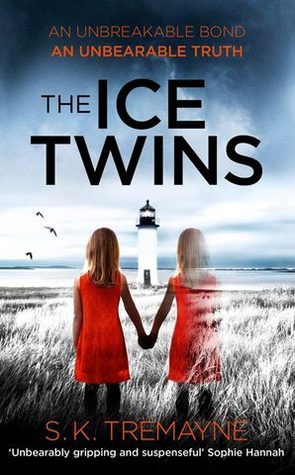
Review - The Ice Twins by S. K. Tremayne

23553419
 
Publisher - Harper Collins
29 January 2015
Copy : Paperback - Reviewer purchased
 
The Blurb
 
I AM KIRSTIE   I AM LYDIA
I LIVED             I DIED
OR DID I?
 
After one of their identical twin daughters, Lydia, dies in an accident, Angus and Sarah Moorcroft move to a remote Scottish island, hoping to mend their shattered lives.  But when their surviving child, Kirstie, claims they have mistaken her identity - that she, in fact, is Lydia - their world comes crashing back down.
 
They know one of their daughters died.  But can they be sure which one?
 
 
The Very Pink Notebook Review
 
This is a wonderfully written, gripping psychological thriller that I would highly recommend. 
 
The Ice Twins, are the two monozygotic identical twin daughters of Sarah and Angus Moorcroft.  Both born with blonde hair and ice blue eyes on the coldest day of the year, the book gets its title from the description the twins grandfather bestows on them - I like when a book title has a direct explanation in the story. 
 
The thing that grabbed me first of all, was how clear the characters were drawn from the very first page.  Written in first person narrative, you are placed inside the head of Sarah, the grieving and shattered mother.  She lives in a fragile, confused state of mind - a women who has seen the broken, lifeless body of her own daughter, held her and watched her die.  Her favourite daughter.  Her mind fractures from one thing to another just trying to get through each day, all the while living with a husband who can barely contain his contempt for her and trying to be a mother to the remaining twin.  The one left behind.  The non-favourite daughter, Kirstie. 
 
Angus, the devastated father, shows his temper is always bubbling beneath the surface and ready to explode at any moment from the outset, something which is not lost on Sarah and contributes to her own edginess greatly.  The reader understands the marriage is fragile, but after what they have been through it is no surprise, however we glean snippets of information throughout the novel that indicate neither partner has been, or is being, completely honest and you start to wonder how deep down the deceit actually goes.  It is quickly established that we do not have reliable narrators with us on this journey.
 
We are quickly whisked from the opening location of London, to the remote Scottish isles.  The imagery and passion with which this location, in which the bulk of the novel is set, is written does not falter throughout and I was thrilled to have actual photographs punctuated throughout the novel - some of them making the hairs on the back of my neck stand up, so eerie some of the plot got.  It was a perfect location to walk hand in hand with the story though.  An island on which they need to rebuild the derelict old house - the place they believe they can equally rebuild a new life, to being the most isolated and wildly desolate and torrid place, which is where they find, in reality, they are in their lives.  Is the task at hand just too big to make work?

 
The twists and turns this story takes are plentiful and each one explained to seem quite plausible.  Not once did I get a sniff of where it was going next and in the end I stopped trying to guess.  I completely flip-flopped from believing they had identified the wrong twin, to not, and found the ways they tried to find out the truth provided a fascinating insight into the unique world of identical twins. 
 
I thought the pacing of the novel was excellent, it opens in the thick of the families emotional distress and we are taken on their journey of recovery, while being given injections frequently of what happened, to bring us to this point.
 
For me, I liked the mixture in the writing.  From the 'theory' of identical twins by the child psychologist, the raw emotion of Sarah and Angus, the general sadness of everyone the tragedy touched and the hints at the supernatural that never failed to send a little shiver up my spine.
 
The very last page made me cry.  And I wasn't expecting that.  I wasn't expecting such a fantastic ending actually, but for me it was perfect and I can ask for nothing more in a book than that.  So, for that reason The Ice Twins get a thoroughly well deserved ...


Wednesday, 30 March 2016

Review - The Widow by Fiona Barton

The Widow Fiona Barton UK
Publisher : Bantam Press
14 January 2016
Copy : Hardback - Reviewer purchased
 
The Blurb
 
Jean Taylor’s life was blissfully ordinary. Nice house, nice husband. Glen was all she’d ever wanted: her Prince Charming.

Until he became that man accused, that monster on the front page. Jean was married to a man everyone thought capable of unimaginable evil.

But now Glen is dead and she’s alone for the first time, free to tell her story on her own terms.

Jean Taylor is going to tell us what she knows.

The Very Pink Notebook Review

This novel has a very strong concept - a happily married couple find life changes beyond all recognition when The Husband, Glen, is accused of the abduction of a little girl, but then Glen dies when he gets hit by a bus and the world wants to know what The Widow, Jean, really knows - and by the world I mean The Reader, of course.
 
The author manages the plot, and develops the suspense of the novel by writing in alternating narrators - all of them extremely unreliable.  The Widow, The Reporter, The Detective, The Mother (of the abducted child) among others, so I was constantly wondering who the hell could be believed.  They were all punctuated with faults and I have to say, my own personal view was, I didn't particularly like any of them, but I think this helped with the general overall whole uncomfortable theme of the book - I don't think a 'nice' character would have served the book well at all.
 
I was never sure what to make of Jean, her thoughts seem scattered and irregular, sometimes she seemed naïve and passive, the product of marrying too young to an over-bearing control freak, but other comments or thoughts seemed to indicate she wasn't as innocent to life as she would have appearances make her.  My one negative thought on the book here, is with regard to the age Jean was pitched at.  She is supposed to be in her forties, but my immediate feeling about her was she was from a much older generation.  Like a house-wife in the 1940's era.  I couldn't get the image out of my head of a dowdy, retired, cardigan / slipper wearing women at the point we find her in this story - if she had been I could have found some of her naivety with regard to some of the issues within the plot much more plausible then.  However, as the story progressed I could see glimpses of why she might be so flip-flopped on her thoughts - prolonged pressure and trauma can do strange things to the mind...
 
Personally I liked how the story pieced-together through both varying narrators and alternating time periods, I thought it was quite clear and didn't ever have to go back and re-read.  I was expecting the pace of the story to be a little faster than what it was, but overall this didn't spoil my enjoyment of the book.  The chapters are quite short and because they varied from narrator to narrator this stopped any chance of it becoming boring.  It was a refreshing way to read a dark thriller, not in the intense place of the head of the main characters, but from the view of those on side-lines.  Those left trying to make sense of it all in the aftermath.
 
One clever thing about the novel is all the characters are quite obsessive about something or another.  It seemed to be a recurring theme throughout and ultimately depicts the darker side of what can happen when obsession takes over and how easily people can be fooled into justifying, unjustifiable actions.
 
When I finished this book I wasn't quite sure how I felt about it.  It wasn't the 'who done it?' I thought it was going to be, it is a dark topic matter, for me there was no likable characters and the ending left me feeling like I wanted to throttle someone, but, it kept me thinking for days and I realised - that is a sign of a good book.  My advice to people who read this book is be prepared for it not to be quite what you think it is going to be. 
 
The Widow, therefore receives ... four pink notebooks :


Sunday, 27 March 2016

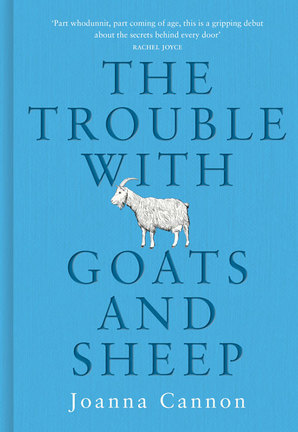
Review : The Trouble with Goats and Sheep by Joanna Cannon

 Summer 1976


Published by : Harper Collins
28 January 2016
Copy : Hardback - Reviewer purchased
 
The Blurb
 
Summer 1976
 
Mrs Creasy is missing and The Avenue is alive with whispers.  As the summer shimmers endlessly on, ten-year-olds Grace and Tilly decide to take matters into their own hands.
 
But as doors and mouths begin to open and the cul-de-sac starts giving up its secrets, the amateur detectives will find more than they could have imagined...
 
Beware of straying from the flock for fear you'll be left out in the cold.
 
 
The Very Pink Notebook Review
 
 
I wanted to read this book, as I had the pleasure of being at an event Joanna Cannon was the key note speaker at, in which she outlined her journey of writing it, but I have to say for some reason the title of the book did put me off somewhat.  However, once I did pick it up I found it very enjoyable.  I liked the pacey, short narratives that flip-flopped between ten-year-old Grace and Tilly and the adult residents of The Avenue that help unravel the mysteries and secrets of the cul-de-sac all relating to the unusual disappearance of one of the street's residents, Mrs Creasy.
 
I got a sense of warmth and comfort while I was reading, thanks to the vivid descriptions of ordinary suburban life in Britain 1976, as memories of long hot summer days when you did run around unsupervised and were in and out of neighbours houses as a matter of course were piqued with acute accurateness.
 
I liked the characters of Grace and Tilly, I was pleased to see the bulk of the story was to be seen through the eyes of a child - something different - and for the most part I found their actions and exploration very believable, however sometimes I felt their 'knowingness' was a little too advanced for the age of 10. 
 
As the story unfolds you do get an insight into each of the lives of the residents of The Avenue, The Forbes, Eric Lamb, Thin Brian and his mother, Sheila Dakin and I thought the little glimpses into their histories, none of them glowing or without faults, was cleverly weaved throughout and helped strengthen the main plot - if you have secrets and faults of your own to hide, what better way to deflect it than to champion the highlighting of someone else's peculiarities?  If the finger and attention is on someone else it won't be on you and this seems to be the drive behind almost all the residents of the street - with one resident, Walter Bishop, bearing the brunt of the finger pointing.
 
Although I didn't get the sense of sadness throughout the book, the actual crux of the story is quite overwhelmingly sad.  In 1970's Britain it was not acceptable to be different or to stand out, and if you did you would be persecuted, both opening and subtly.  In order to be seen as a good and upstanding member of the community sometimes people could resort to new lows to make sure they seemed like a good citizen and would pick off the weak. 
 
Margaret Creasy, by being a genuinely good citizen finds out the secrets behind all the doors of The Avenue...
 
...And I suggest you read this book to find out if it is to her detriment...
 
 
This book is well worth a read and as such I give it :


Wednesday, 23 March 2016

WIN - A signed copy of I Let You Go by Clare Mackintosh

As the final instalment to 'Clare Mackintosh Feature Week', I have a signed copy of Clare's first chart-busting novel, I Let You Go, to giveaway. 

To be in with a chance of winning simply click here to follow me on Twitter @lynseymummaduck retweet the pinned tweet and send me a message saying why you would like this fabulous book!

The giveaway will close at 09:00 on Saturday 26 March 2016 (GMT) and is only open to UK residents.  A winner will be selected at random and notified by 12:00 the same day via Twitter.