Wednesday, 29 June 2016

Review : That Girl From Nowhere by Dorothy Koomson

Published by : Century
9 April 2015
Copy : Paperback - Reviewer purchased

The Blurb

Can you have a future without knowing your past?

Clemency Smittson was adopted as a baby and the only connection she has to her birth mother is a cardboard box hand-decorated with butterflies.  Now an adult, Clem moves to Brighton, where she was born, and meets someone who knows all about the butterfly box and what happened to her birth parents.

As the shocking secrets about her adoption and childhood start to unravel, Clem has to decide if the cost of having contact with her first family is a price too high to pay...


The Very Pink Notebook Review

This is the second Dorothy Koomson book I have read and I was glad to find it was as beautifully written and plotted as the first.  The heart of the story is about family, the one Clemency, our young protagonist, has been gifted with via adoption and the discovery of her biological one.  Within this, the author looks closely at the myriad of relationships one has going on in life. 

For Clemency this is the one with her adoptive family; her mother (that provided, for me, quite a source of light humour in what could have been a very intense book), the memory of the one with her beloved late adoptive father and the stressful one with her adoptive uncle, aunt and cousin who can't seem to look past the colour of her skin which has really affected Clem, because she already feels like 'the girl from nowhere'. 

Then of course there is the building of a relationship with her newly discovered birth family, the parents, siblings and grand-mother and all the highs and lows it brings.  Add to this a complicated love-life, including a secret marriage and you have quite an emotional web to untangle. 

Of course, families are notorious for causing the most happiness, but equally can cause the most pain and Clemency soon discovers all families have secrets and her entry into her biological world soon presents her with mysteries to solve and dilemma's to challenge her, particularly as Clemency is a people-pleaser, and she slowly finds herself isolated in who she can talk to about anything which make already complex situations even more complicated.

I found this book very well written and easy to read with a host of colourful and interesting characters.  I also liked the reference to Clemency's childhood, which took me back to my own with a nostalgic recall of longing for pink roller skates or the most up-to-date Girls World.  I also loved the way Koomson made Clemency, almost fanatical, about photographs - proof that she was really with people and in places - proof she does exist.  I thought that was very touching.  

It did take a while to complete as it was quite lengthy.  On occasion I felt a little too much detail was given than strictly necessary, but this would be my only mildly negative comment on the book as a whole.

As such I give this book a well rounded :


Wednesday, 18 May 2016

Review - What a Way To Go by Julia Forster

Published : Atlantic Books
7 January 2015
Copy : Paperback - Received signed copy from author


The Blurb
1988.
Twelve - year - old Harper Richardson's parents are divorced.  Her mum got custody of her, the mini and five hundred tins of baked beans.  Her dad got a mouldering cottage in a midlands backwater village and default membership of The Lone Rangers single parents' club.  Harper got questionable dress sense, a zest for life, two gerbils, her Chambers dictionary - and the responsibility of fixing her parents broken hearts...
Set against a backdrop of high hairdos and higher interest rates, pop music, puberty, divorce and decrepitude, What a Way To Go is a warm, wise and witty tale of one girl tackling the business of growing up while those around her try not to fall apart.


The Very Pink Notebook Review


I didn't know what to expect from this book, but I was looking forward to reading it and taking a little break from psychological thrillers.  I wasn't to be disappointed, I found it to be a gentle, beautifully written story, with really likable and funny characters.
 
The reader is told the story through the eyes of the eyes of twelve-year-old Harper, who I adored.  Julia has managed to bring to life a real character here - capturing perfectly a 1980's 'nearly' teenager.  There was no cartoon-like mannerisms to her, everything Harper says and does I could really relate to someone of her age thinking and believing.  Her personal little asides made me laugh out loud, quite literally, probably more so because I would have been about her age when the novel is set, 1988, so many of the things she mentions, longs for, does I was mentioning, longing for or doing. 

I loved how 'ordinary' the other characters were and what they were doing too.  The story covers normal, everyday life, very realistic (ok - so maybe I personally have never known anyone to buy their coffin, put shelves in and use it as a book case until they need it - but, that isn't to say it doesn't happen!) and all of it a nostalgic nod to the grand old 1980's when chain smoking indoors was quite accepted, booze runs to France were the highlight of the year and shell suits were cool, although ridiculously flammable.

Although there are no big showdowns, explosions or highly gripping cliff-hangers, what this book is full of is emotion.  Harper is highly sensitive to the feelings of everyone around her and goes to great lengths to protect others, from her parents to the elderly neighbour in the village. This is mostly done quite humorously, after all a lot of people cope with stress this way, but the plot is piqued with one or two sad and serious issues and as much as I did laugh with this book I did also shed a tear (or two hundred) towards the end and that was when I knew how involved with the book and its characters I was. 

I can only imagine this book was a real joy for Julia Forster to write and I hope, one day, we might see how Harper is doing as a grown up...

I give this book a thoroughly well deserved

and highly recommend everyone spends time in the company of Harper and her, slightly mad, family.


Friday, 6 May 2016

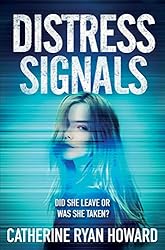
Guest Post : My Typical Writing Day by Catherine Ryan Howard author of Distress Signals

Distress Signals author Catherine Ryan Howard shares a tongue-in-cheek guest post with The Very Pink Notebook into her writing day...
 
 
MY TYPICAL WRITING DAY
A Guest Post by Catherine Ryan Howard


23:00(ish)    My writing day typically begins the night before, when I get notions about being super organised and doing all those 263 Things Successful People Do Before They Even Wake Up malarkey. I organise my desk, open my WIP on my computer and set the coffee machine to start brewing just in time to have my first cup of coffee at six o’clock the following morning. The smell, noise and promise of caffeine will get me out bed. No, it totally will.


Next day


06:00    Alarm goes off.


06:01    Turn off alarm. Fall back asleep.


07:15    Wake up again.


07:16    Fall back asleep.


08:45    Wake up for real. Ugh, I’ve slept in! AND wasted a bucket of coffee. No point rushing now, I suppose. Find phone. Quick check on Twitter before I get out of bed...


10:30    *buzzer goes* Crap. That’s the postman with the huge amount of superfluous stationery I ordered online a few days ago when I was procrastinating by shopping online. *mad scramble to put on Outside Clothes* Well, at least I’m up now.


10:35    Obligatory playing with stationery.


11:10    Okay, enough messing about. You’ve LOADS to do. Time to get down to work. But first, coffee.


11:25    Finally sit down at desk. But who starts work at twenty-five minutes pass the hour? Only a crazy person! I’ll start at noon. Until then, I’ll just do a quick round of email-Twitter-blog comments-Facebook-Instagram...


12:45    Well, that’s lunch. Practically. May as well watch a couple of Friends episodes while I’m eating.


14:00    Okay, seriously. SERIOUSLY. Work now. Open WIP. Where did I leave off yesterday? There? Are you sure? Better go back to the start, 30,000 words ago, and read it again from the beginning, just to be REALLY sure.


14:30    Hmm… Am I using that big word right? I’ll just quickly check the definition. And now, since I’m online, I may as well just check Twitter...


15:10    Tom Hiddleston is rumoured to be going out with WHO?!


15:15    Tom Hiddleston was in that movie? Really? I don’t remember him at all. Maybe there’s a clip on YouTube..


15:25    Ted Talks and more coffee.


15:45    Back to reading what I wrote so far.


17:45    Finish reading what I wrote so far. Discover I’d left off exactly where I thought I did. There really was no reason to go back and read the whole thing... Now it’s almost Friends re-run o’clock (again), and then I’ve to make dinner, and then Master Chef will be on so... Oh well. Tomorrow’s another day.


23:00(ish)    Tomorrow I’m going to get up early, ignore social media and write 10,000 words. Yes I am yes I am yes I am. Organise my desk, open the Word document that my current WIP is in on my computer and set the coffee machine to start brewing just in time to have my first cup of coffee at six o’clock...
 
 
I think a lot of aspiring writers will be thrilled to read they are not alone in procrastinating!  Also, I must invest in a coffee maker I can programme to start itself in the mornings!  Thank you Catherine for guest posting with The Very Pink Notebook and congratulations on a fantastic novel. 


ABOUT DISTRESS SIGNALS:

 
Standalone crime/thriller

 
Published May 5 by Corvus/Atlantic in Ireland and the UK, June 2 in Australia and New Zealand. Details of North American publication later in 2016 coming soon.

 
Did she leave, or was she taken?

 
The day Adam Dunne's girlfriend, Sarah, fails to return from a Barcelona business trip, his perfect life begins to fall apart. Days later, the arrival of her passport and a note that reads 'I'm sorry - S' sets off real alarm bells. He vows to do whatever it takes to find her.

 
Adam is puzzled when he connects Sarah to a cruise ship called the Celebrate - and to a woman, Estelle, who disappeared from the same ship in eerily similar circumstances almost exactly a year before. To get the answers, Adam must confront some difficult truths about his relationship with Sarah. He must do things of which he never thought himself capable. And he must try to outwit a predator who seems to have found the perfect hunting ground...

 
Advance praise:

 
“Pacey, suspenseful and intriguing … [A] top class, page turning read. Catherine Ryan Howard is an astonishing new voice in thriller writing.” — Liz Nugent, author of 2014 IBA Crime Novel of the Year Unravelling Oliver

 
“An exhilarating debut thriller from a hugely talented author. Distress Signals is fast-paced, twisty and an absolute joy to read.” — Mark Edwards, #1 bestselling author of The Magpies and Follow You Home

 
Read a preview of the first three chapters here:


Amazon.co.uk link:


ABOUT CATHERINE:

 
Catherine Ryan Howard was born in Cork, Ireland, in 1982. Prior to writing full-time, Catherine worked as a campsite courier in France and a front desk agent in Walt Disney World, Florida, and most recently was a social media marketer for a major publisher. She is currently studying for a BA in English at Trinity College Dublin.


Twitter: @cathryanhoward
Instagram: @cathryanhoward
Facebook: facebook.com/catherineryanhoward


Thursday, 5 May 2016

Review : Distress Signals by Catherine Ryan Howard

Distress Signals: An incredibly gripping psychological thriller with a twist you won't see coming
Published by : Atlantic Books / Corvus
5 May 2016
Copy : Received from publisher for honest review
 
DID SHE LEAVE OR WAS SHE TAKEN?
 
The Blurb
 
The day Adam Dunne's girlfriend, Sarah, fails to return from a Barcelona business trip, his perfect life begins to fall apart.  Days later, the arrival of her passport and a note that reads 'I'm sorry - S' sets off real alarm bells.  He vows to do whatever it takes to find her.
 
Adam is puzzled when he connects Sarah to a cruise ship called the Celebrate - and to a women, Estelle, who disappeared from the same ship in eerily similar circumstances almost exactly a year before.  To get the answers, Adam must confront some difficult truths about his relationship with Sarah.  He must do things of which he never thought capable.  And he must try to outwit a predator who seems to have found the perfect hunting ground...
 
The Very Pink Notebook Review
 
Catherine Ryan Howard has produced a brilliant, clever and gripping psychological thriller in Distress Signals with a high body count, wealth of unreliable characters and clever use of maritime law to muddy the investigative process to such a level I am pretty sure I will never be boarding a cruise ship in my lifetime. 
 
Hooked from the very first page, where our narrator, Adam, is plunged into the dark depths of the sea I found myself needing to continue to read and discover.  I loved the way this novel was written, mostly in the first person voice of Adam, the long term boyfriend of the missing Sarah but punctuated with the third person narrative, almost as a completely separate story, of both Corrine and Romain.  I knew the three would eventually come together but until they did I could only guess as to how.  All three viewpoints were intriguing and at times heart-wrenching - particularly those of Romain and Corrine.
 
Although there are quite a lot of characters within the story it never got confusing, and they all had a hint of the unreliable in them so I was never quite sure who I should be trusting - is Rose really 'telling all' given she is Sarah's best friend and not Adam's, or does Adam's best friend Moorsey have an ulterior motive given he has recently started dating Rose and everyone says how alike she is to Sarah?  Then of course there is the mysterious Ethan and the staff at the cruise company who are clearly lying... let's just say my detective skills were sent in all sorts of directions and I didn't work out what the end result was going to be which made the finale all the better.
 
Beautifully paced and with a fascinating suggestion of the darker underworld of the cruise industry, Distress Signals is a compelling read that not only looks at the 'who done it' but also the 'why'.
 
A must read and therefore I give it ...
 

Tomorrow - Distress Signals author Catherine Ryan Howard shares a guest post with The Very Pink Notebook.


Wednesday, 27 April 2016

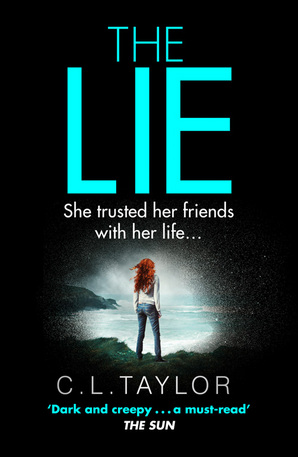
Review - The Lie by C. L. Taylor

Product Details image
 
Published by : Harper Collins UK
24 April 2015
Copy : Paperback - Reviewer purchased
 
 
The Blurb
 
I know your name's not really Jane Hughes...
 
Jane Hughes has a loving partner, a job in an animal sanctuary and a tiny cottage in rural Wales.  She's happier than she's ever been but her life is a lie.  Jane Hughes does not really exist. 
 
Five years earlier Jane and her then best friends went on holiday but what should have been the trip of a lifetime rapidly descended into a nightmare that claimed the lives of two of the women.
 
Jane has tried to put the past behind her but someone knows the truth about what happened.  Someone who won't stop until they've destroyed Jane and everything she loves...
 
 
The Very Pink Notebook Review
 
 
The concept behind this novel is brilliant and I was looking forward to reading it.  I have to say, it is a very creepy and dark plot, maybe a little too dark for me, but that aside, it certainly had me thinking about it for days afterwards and I couldn't put it down when I was reading it - even if it was with one wary eye!
 
If you don't mind quite graphic, dark underbellies of worlds then this book is for you.  It will make you feel uncomfortable.  I, personally, didn't actually like any of the characters and found it a little hard to understand how the four friends, of whom the bulk of the story is set around, would actually be friends.  They are all very damaged, but this probably was the draw of friendship between them.  It ultimately turns out to be the demise as well.
 
The plot is thrashed out in both past and present tense, which I quite enjoyed.  I don't think I could have taken the intensity of it happening in present tense, so to get a break from what happened on 'the holiday' was always welcome.  I felt the first two thirds of the book were better than the final third when it all seemed to become a bit rushed.  I especially felt this with regard to the ending.  For me, it didn't tie up all of the unanswered questions quite enough.
 
That aside, for the bulk of the book I was gripped and it is certainly worth a read, particularly if you like the darker, grittier type of psychological thriller and as such I give it a very worthy : 


Thursday, 7 April 2016

Review : The Truth About Julia by Anna Schaffner


Had Julia been seduced and corrupted by someone?
Was she simply evil?  Had her character been spoiled
and damaged by bad parenting?  Or was there a cold,
perhaps even sociopathic streak in her personality?
 

Published by : Allen & Unwin (Atlantic Books)
7 April 2016
Copy : Paperback - Received from Publisher
 
The Blurb

In June 2014, Julia White - a beautiful and intelligent young woman - blows up a coffee shop in central London, killing twenty-four people before turning herself in to the police. Apart from publishing a potentially ironic manifesto, she refuses to explain the reasons for her actions.

Clare Hardenberg, an investigative journalist, has been commissioned to write a biography of Julia but at the start of the novel she is on her way to prison herself. What has brought her to this point?

The Very Pink Notebook Review
 
This is a stunning debut novel by author Anna Schaffner.  I received an early copy of this book, along with a press release from the publisher.  After reading just the PR I could not wait to get started and I was not to be disappointed.
 
Throughout this book, we are taken on a journey with investigative journalist, Clare Hardenberg.  In actual fact we are taken on two, her own personal one and that which the title suggests, her search for The Truth About Julia, the young women who has committed a devastating act of terror.
 
Clare narrates the story by way of manuscript to her colleague (and ex-lover) George.  We discover she is writing it, at first, from a hospital mental ward, where she has been admitted prior to her transfer to prison.  Two huge plots then merge, gracefully into one tell-all story.  
 
It works brilliantly well.  The point of Clare writing the manuscript is to try and order everything in her own mind.  It lays the plot out, fully and simply, so George, her sister Amanda and niece Laura, can try to understand what brought her to the point in her life that made her commit a crime that has lead to her incarceration - she wants to provide the evidence so they can at least come up with their own version of the truth, because, as Clare eloquently points out : there are only ever versions of the truth.  And this is just one of the many things about the book the author does so well.  
 
From the outset I loved the way this novel was written, it is highbrow, intellectual (because the characters are all from such backgrounds) but not in a way that was hard work.  Anna Schaffner uses a myriad of rich language but not once did I find it overbearing or superfluous to the plot, never once did I find long words for the sake of long words, or the political / ethical / moral issues debated within the dialogue boring.  It moves along at a great pace and with such fluidity I found myself half way through the book in the first sitting.
 
Anna Schaffner has created characters who seem very real, I strangely felt like I knew each one better than I did - I got the feeling the author had spent a lot of time with them, thinking about each individual life, their history, their unique and personal viewpoint and Schaffner certainly managed to get that across, however small their part.  There are a lot of complex, sensitive issues and topics the plot covers and they were all done so with confidence and ownership.
 
I thought book on the whole was really quite unique and I thoroughly enjoyed what could have been an uncomfortable and gruelling read, but instead what insightful and thought-provoking.
 
I look forward to more from Anna Schaffner in the future.
 
I highly recommend this book and as such give it :
 
 
 I received a copy of this book in exchange for an honest review.


Wednesday, 6 April 2016

Q & A with Anna Schaffner - Author of The Truth About Julia (published 7 April 2016)


Anna, thank you so much for answering some questions for my blog about your amazing upcoming debut novel - The Truth About Julia (published by Allen & Unwin – 07 April 2016).

Q : Firstly, could you tell the readers a little bit about yourself and what enticed you into writing a novel, is it something you always wanted to do?
I had wanted to become a writer ever since I was a teenager, but then I got sidetracked and became an academic instead. I often came up with plots for novels, but kept hesitating, and never put any of it to paper. Now that I look back on it, it’s clear that there was a part of me that must have known when the time would be right for me to sit down and write. It was only in my early thirties. A few years ago, I wrote a novel about a female artist – a painter – who lived through many of the most extraordinary events of the twentieth century, but when it was finished I decided to put it to one side. Quite soon after that I had the idea for The Truth about Julia and, when I was about half way through it, I enrolled on a Faber and Faber writing course. This course was enormously helpful, as I received wonderful feedback on my early drafts.

Q : You work at the University of Kent as a Reader in Comparative Literature, how did you find the time to write a novel – can you give us a ‘typical’ writing day?
I generally write for about two to three hours in a day, and I try to write every day. I am at my best in the mornings, and try whenever possible to write from 9am to about 12, as these are my most alert and creative hours. But the recent arrival of my 10-month old daughter has complicated this a bit further. During the day, when I teach and deal with admin and other university things, my characters stay with me and develop further in my mind. I often write little ideas in a notebook that is always in my handbag.
I also write non-fiction, and enjoy switching between creative and academic writing, which are entirely different beasts but feed into one another in unexpected ways. When I am stuck with one project, I can always turn to the other, until the blockage dissolves. While I wrote The Truth about Julia, I was also working on a cultural history of exhaustion. The strong sense of political and spiritual exhaustion that Clare feels, and her anxiety that all her life’s work has been in vain, are definitely indebted to my other work.

Q : How did ‘The Truth About Julia’ develop as an idea into a novel? The subject matter of The Truth About Julia is very prevalent in current society, did you find it a sensitive or tricky subject to research and write about?
Ours is the age of terrorism. A few years ago, I found myself intrigued by the ways in which commentators tried to explain the growing number of Western youths joining ISIS, and why it is that people from educated and seemingly stable homes can become radicalized to such an extent that they end up committing terrorist atrocities. I felt that the various explanations for political radicalization ultimately remain limited and unsatisfactory. Political disenchantment, bad parenting, cultural alienation and socio-pathological tendencies, as well as ‘corruptor’ figures praying on the vulnerable – these only ever illuminate aspects of what is a highly complex problem.
ISIS and the premises of radical Islam, however, are so utterly alien and unacceptable to Westerners that I wanted to explore these questions in a way that makes them more relatable. Julia White, the terrorist in my novel, does the wrong thing for (potentially) the right reasons. She crosses a line, and drags someone down with her who has become dangerously disenchanted with the conventional ways of bringing about political change. Clare Hardenberg, who narrates Julia’s story and interviews her friends and family members, is an investigative journalist who feels increasingly angry and frustrated that her writing has not led to political change. As a writer and an academic, I, too, often worry about whether any of what my colleagues and I are doing is meaningful and impactful even in small ways, and I fear that it may not be.
I grew up in Germany, and vividly remember ‘Wanted’ posters pasted all across my hometown when I was a child. These posters displayed the photographs of a number of intimidating-looking female terrorists associated with the left-wing Baader-Meinhof gang. The figure of the female terrorist – women who kill for their political beliefs – has fascinated me ever since.
Finally, I also teach and write on modernist writers such as Virginia Woolf, Franz Kafka and William Faulkner. I have always liked the wider implications of multi-perspectival narratives, the idea that there is never just one definitive ‘truth’ out there but only different ways of seeing the world.

Q : You recently completed a Faber Academy writing course, do you feel the course helped The Truth About Julia become a reality?
Absolutely! It was extremely motivational. We were taught by a fantastic editor at Faber and Faber and a literary agent, and benefited enormously from our tutors’ insider knowledge. Although I have been working on literature all my professional life, the course introduced me to a completely different aspect of the literary world. I felt a bit like a restaurant critic who for the first time ever tries to cook a meal herself, and realizes just how difficult and complex that is.

Q : What will you be doing on publication day (07 April 2016) to celebrate?
Have champagne and go to the seaside!

Again, thank you Anna for taking the time to share your thoughts with The Very Pink Notebook and congratulations on a fantastic, different and thought – provoking novel.